
Knowledge Hub
Regenrative Agriculture
Regenerative Agriculture
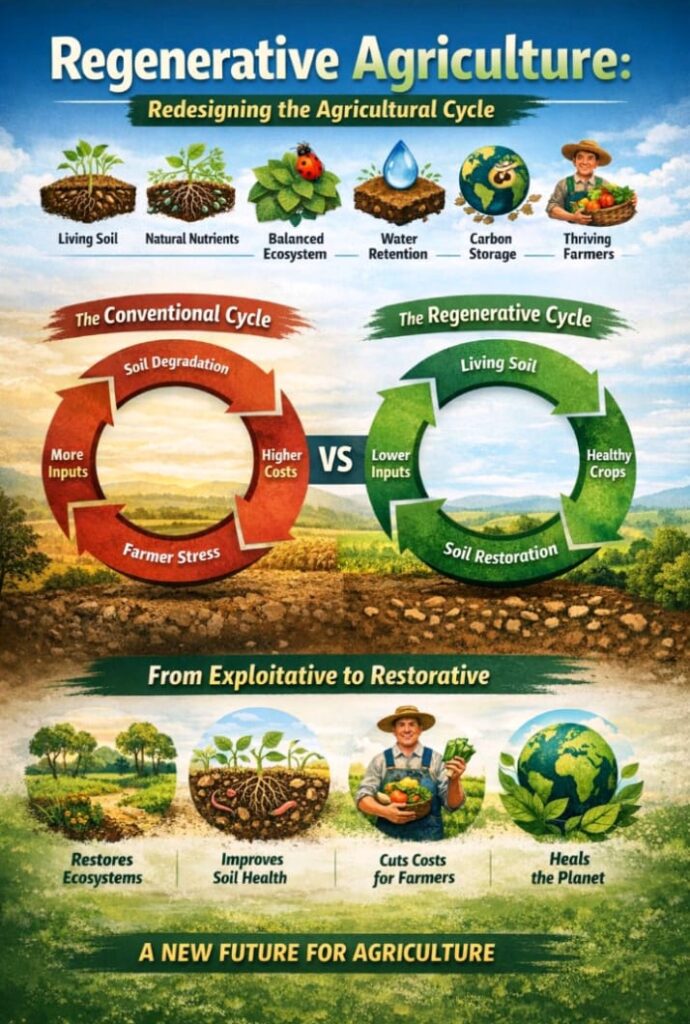
This system focuses on redesigning the agricultural cycle by working with nature. It promotes living soil, natural nutrients, balanced ecosystems, better water retention, carbon storage, and improved farmer well-being.
Key Elements of Regenerative Agriculture
Regenerative practices build living soil rich in microorganisms, use natural nutrient cycles, support biodiversity, improve water-holding capacity, store carbon in soil, and help farmers achieve stable and sustainable livelihoods.
The Conventional Farming Cycle
Conventional agriculture often leads to soil degradation due to heavy chemical use. Farmers face higher input costs, increased stress, and declining soil fertility, creating a cycle of dependency on external inputs.
The Regenerative Farming Cycle
Regenerative agriculture creates a positive cycle where living soil leads to soil restoration, lower input use, and healthier crops. This cycle improves productivity while reducing environmental damage.
Shift from Exploitative to Restorative Farming
Regenerative agriculture moves away from exploiting natural resources and instead focuses on restoring ecosystems. It improves soil health, reduces farming costs, supports farmer income, and contributes to healing the planet.
Future of Agriculture
The image highlights regenerative agriculture as a sustainable path forward, offering long-term sol
Farming Approach
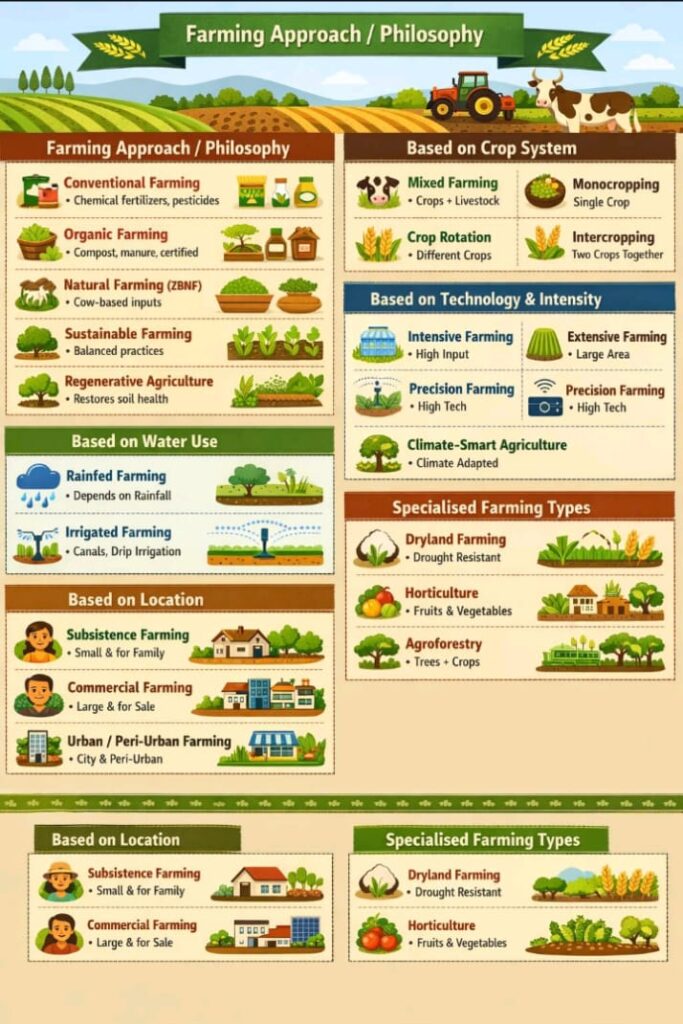
Describes farming methods based on input use, sustainability, and environmental impact.
- Based on Crop System: Classifies farming according to how crops and livestock are grown and managed.
- Based on Water Use:Groups farming types according to rainfall dependency or irrigation methods.
- Based on Technology and Intensity:Categorizes farming based on input levels, land use, and technological application.
- Based on Location:Defines farming according to where it is practiced and its purpose.
- Specialised Farming Types:Includes farming methods designed for specific crops or environmental conditions.
Hydroponic System
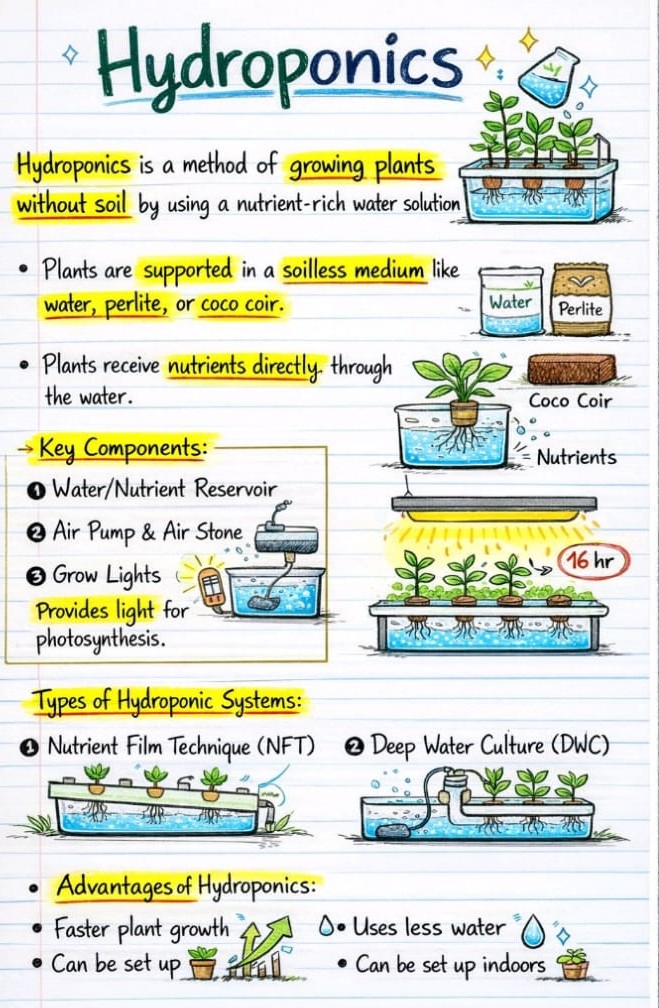
A method of growing plants without soil using nutrient-rich water.
Growing Medium
Plants are supported in water, perlite, or coco coir.
Nutrient Supply
Nutrients are delivered directly to plant roots through water.
Key Components
Includes a water or nutrient reservoir, air pump with air stone, and grow lights.
Types of Hydroponic Systems
Common systems include Nutrient Film Technique (NFT) and Deep Water Culture (DWC).
Advantages of Hydroponics
It allows faster plant growth, uses less water, and can be practiced indoors.
Biochar
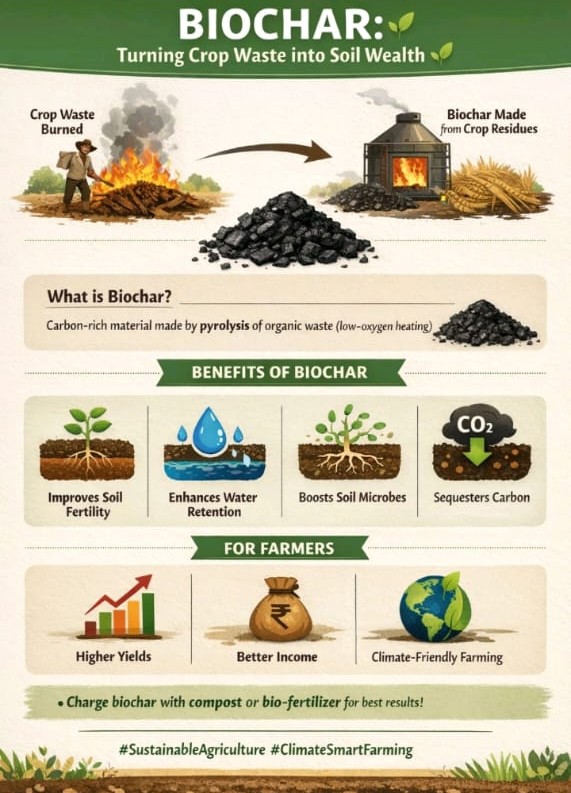
Biochar is a stable, carbon-rich material created when crop residues such as straw, husks, or wood waste are heated in a low-oxygen environment. Unlike open burning, this process prevents complete combustion, allowing carbon to remain locked in the material. When added to soil, biochar acts as a long-lasting soil amendment and helps improve soil quality over time.
How It Is Made
Biochar is produced through a process called pyrolysis, where organic farm waste is heated at high temperatures with little or no oxygen.
Benefits to Soil
Biochar improves soil structure by increasing porosity, which helps soil retain water and nutrients for longer periods. It creates a favorable environment for beneficial soil microorganisms and reduces nutrient loss through leaching.
Benefits to Farmers
By improving soil fertility and moisture retention, biochar supports better crop growth and higher yields. Healthier soils reduce the need for chemical fertilizers, lowering input costs.
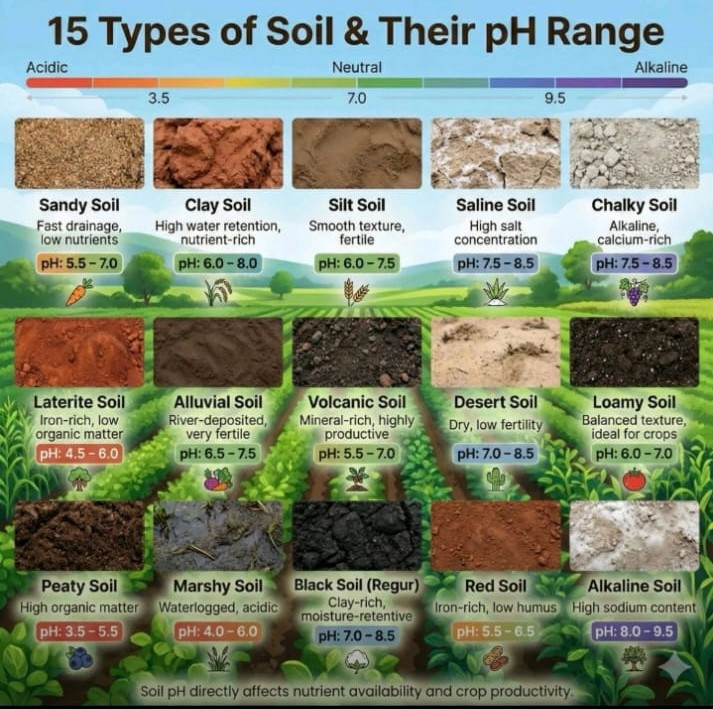
Types of Soil and pH Range
Soils are classified based on texture, composition, and pH value, which affects nutrient availability and crop growth. Common soil types include sandy, clay, silt, loamy, laterite, alluvial, black, red, desert, saline, peaty, marshy, volcanic, chalky, and alkaline soils, each supporting different crops depending on acidity or alkalinity.
Importance of Soil pH
Soil pH directly influences nutrient absorption and plant productivity. Acidic soils suit crops like tea and potatoes, neutral soils support most crops, and alkaline soils are suitable for salt-tolerant plants. Understanding soil type and pH helps farmers choose suitable crops and improve yield.
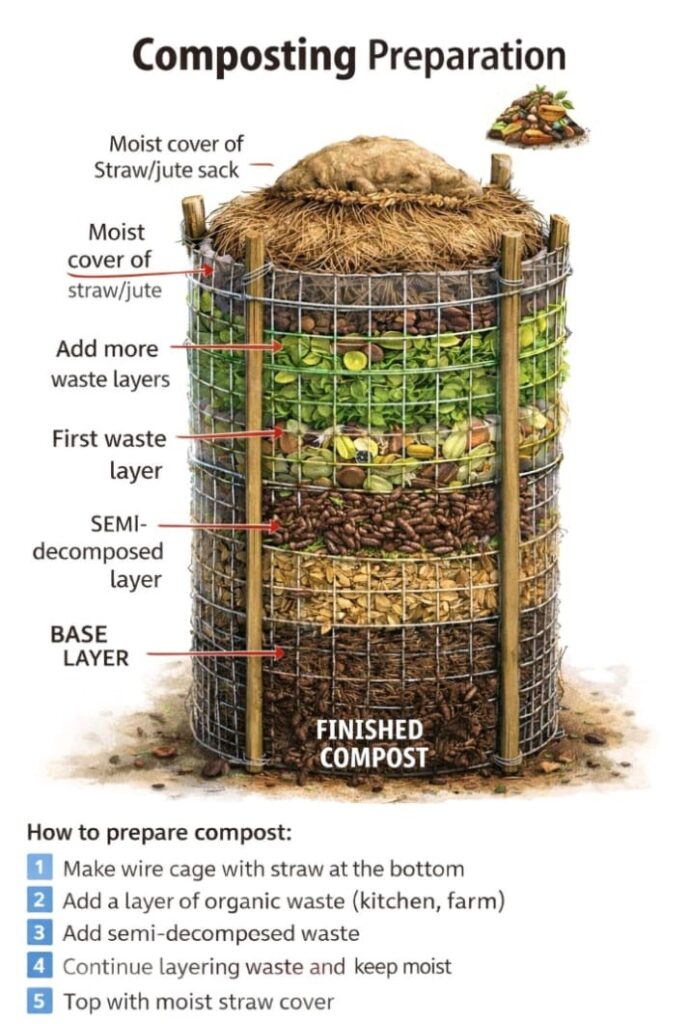
Composting Preparation
Composting is the process of converting organic waste into nutrient-rich manure by layering biodegradable materials in a compost pit or wire cage.
Steps in Compost Making:
Compost is prepared by first creating a wire cage or pit with straw at the bottom, then adding layers of organic waste and semi-decomposed material. These layers are repeated while maintaining moisture, and finally covered with moist straw to support proper decomposition.
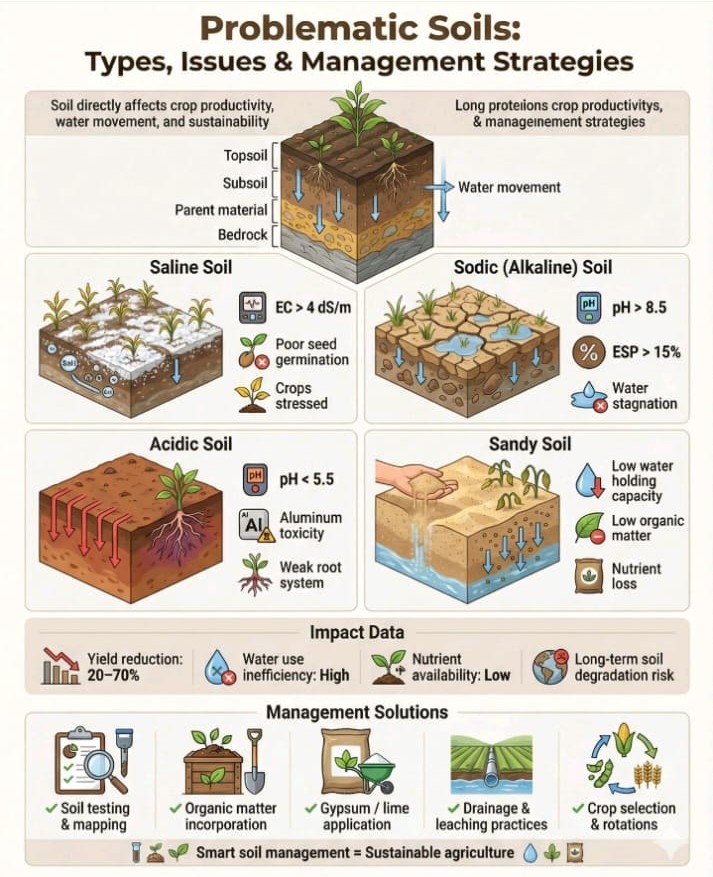
Problematic Soils
Problematic soils are soil types that limit crop growth due to poor physical or chemical properties.
Issues Caused by Problematic Soils
Such soils lead to poor seed germination, weak root development, water stagnation or rapid drainage, low nutrient availability, and reduced crop productivity. Long-term use without management can result in soil degradation and yield losses of 20–70%.
Management Strategies
Problematic soils can be managed through soil testing, adding organic matter, applying gypsum or lime based on soil type, improving drainage and leaching practices, and selecting suitable crops and crop rotations to restore soil health.
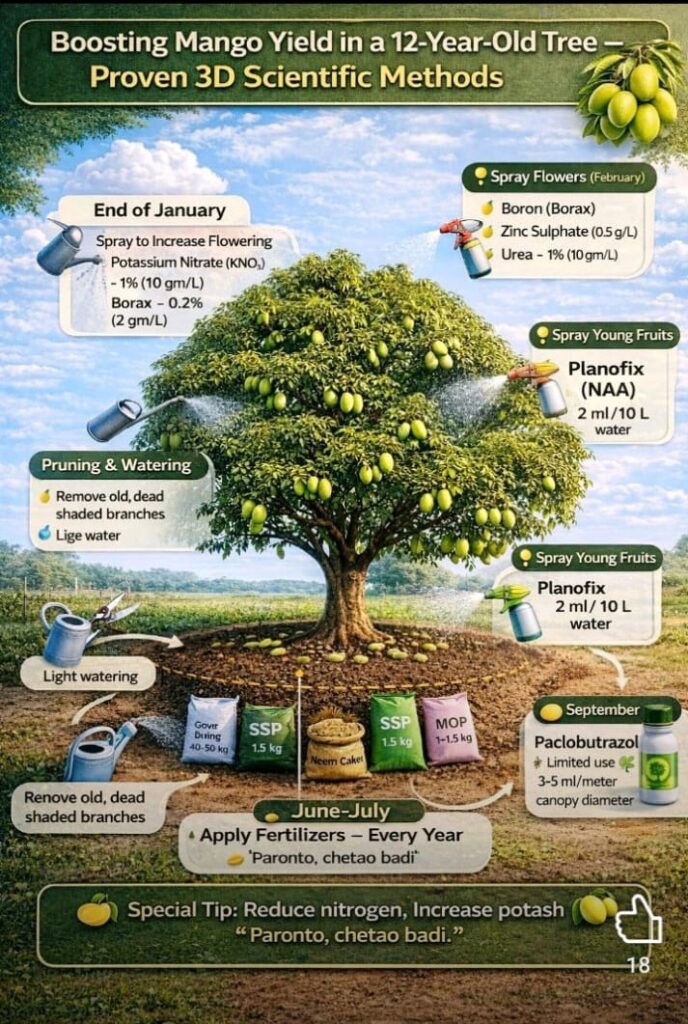
Boosting Mango Yield in Mature Trees
Mango yield in older trees can be improved through scientific nutrient management, pruning, and timely spraying.Nutrient and Spray Management
Spraying potassium nitrate and boron at the end of January enhances flowering, while zinc sulphate and urea sprays support flower health. Planofix (NAA) sprays during fruit development reduce fruit drop and improve fruit retention.
Fertilizer and Growth Regulation
Applying organic manure and balanced fertilizers during June–July supports tree nutrition. Limited use of growth regulators like paclobutrazol helps control excessive vegetative growth and improves flowering, while reducing nitrogen and increasing potassium enhances fruit yield and quality.
Reach Out Today to Explore Collaboration Opportunities
We believe that together, we can make a bigger difference for cows, sustainable farming, and green energy. Whether you are a volunteer, farmer, organization, or supporter, your ideas and efforts can help us create a more compassionate and sustainable world.
Connect with us today, and let’s collaborate to protect cows, promote eco-friendly solutions, and build a greener future—one step at a time. 🌱🐄